
Contenuto
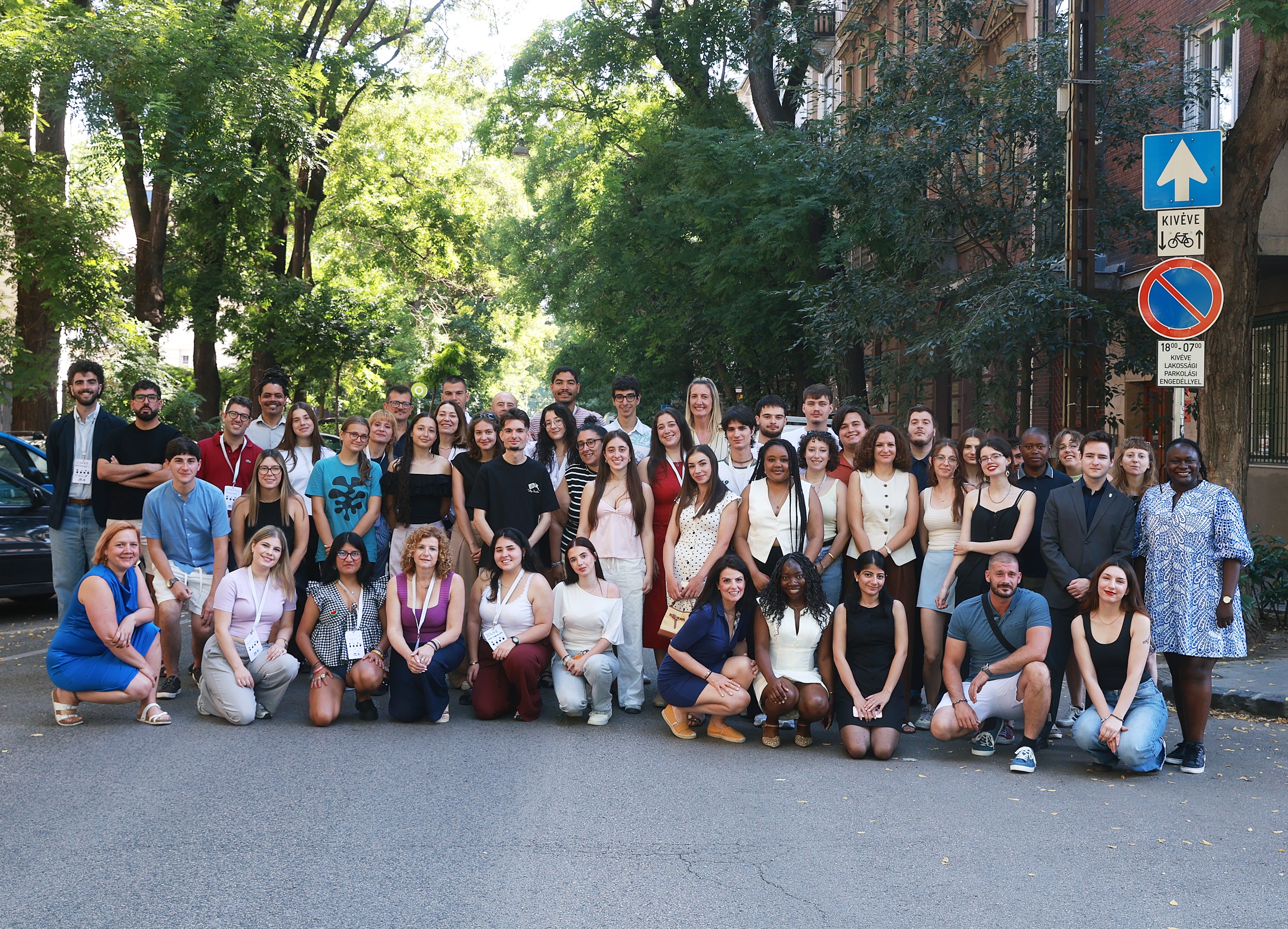
From June 24th to 27th, 2026, a delegation from the Unione Reno Galliera — comprising the European Project Office staff, local administrators, and the project's youth Ambassadors — traveled to Budapest for a crucial new transnational meeting of the CLYMACT project. At the heart of this four-day Hungarian event were the definition of new paradigms for urban waste management (green and food waste), climate mitigation driven by younger generations, and the strategic synergy between university research and green start-ups. The event served as a major platform for institutional cross-fertilization, merging local government decision-making processes with the dynamic spirit of youth co-creation workshops.
Ecological Transition and Youth Policies: Work at the Benczúr Hotel
The opening session, hosted at the Benczúr Hotel, featured institutional welcomes from Viktor Olivér Pap (Youth Mayor of Zugló) along with Craig V. Johnson (President of the GiLE Foundation). The focus immediately turned to circular economy best practices, featuring the presentation of the Panda Banda ReGeneration project led by Viola Chikán and a technical report by Mária Csikai on the strategic management of the Zugló Green Waste. Under the expert guidance of the Hungarian CLYMACT Ambassadors, the young delegates from across Europe and the Unione Reno Galliera acted as true catalysts for change during the Deep Dive Sessions and subsequent Team Working Sessions. Through interactive design thinking methodologies and inclusive practices, the workshops explored new pathways for social and climate innovation, translating youth visions into concrete urban policy proposals.
The Research Axis: Bridging University and Food Studies
A core pillar of the Budapest mission was the scientific exploration of food system sustainability and bioeconomy, which took place at the MATE Budai Campus (Hungarian University of Agriculture and Life Sciences). The delegation took part in a cutting-edge guided tour of the university campus, an hub of excellence for food research and studies. Discussions with the university's professors highlighted how academic research must be structurally integrated into local action plans, providing municipalities with the scientific, evidence-based data required for a fair ecological transition.
Urban Agroecology and the Food Upcycling Start-up Ecosystem
The practical application of food sustainability and organic waste management was demonstrated through two highly impactful operational moments:
Territorialization and Zero-Km: a visit to the Zuglói Kenyérközösség, a market centered around local food systems, community engagement, and resilient, short-supply-chain markets.
The Startup Showcasing: an inspiring session highlighting the entrepreneurial potential of the green transition. The roundtable discussion was flawlessly moderated by Hungarian CLYMACT Ambassador Rabia Nayyar, who brilliantly guided the exchange between industry experts and founders of innovative start-ups — such as Júlia Dalmadi (Secontaste), a pioneer in Food Upcycling, and Marianna Pinczés (Grapoila). The panel focused on recycling industrial food waste (green waste and byproducts) into high-value new resources, and concluded with a tasting session to experience the innovation firsthand.
Institutional Synergies and Strategic Planning for Next Steps
While one part of the delegation explored green resilience on the ground through a Study Visit led by Katalin Varga at Városliget (Budapest's City Park), the decision-making tables achieved significant progress in governance and international cooperation.
At the Municipality of Zugló, the political delegation of the Unione Reno Galliera met with the Mayor of the Hungarian district, András Rózsa, laying the groundwork for an important transnational twinning pre-agreement. This preliminary memorandum of understanding, focused on the project's key themes, will be formally signed in the coming weeks to establish a permanent channel for exchanging best practices between the Hungarian and Bolognese territories (focusing on: ecological transition, sustainable mobility, fighting climate change, youth policies, urban regeneration, and educational projects).
The value of this inter-institutional synergy was underscored during an assembly speech by the Local Councillor of Pieve di Cento Municipality, Matilde Manfredini, who emphasized the importance of connecting local visions to macro-European strategies while giving a voice to young people eager to propose changes to local decision-makers. Significant contributions were also made by the Commissioners Members (Assessori) of Bentivoglio Municipality, Rosario Renna, and Argelato Municipality, Lorenzo Tescaro, who stressed the need for integrated district planning capable of addressing green waste management and sustainability on a supra-municipal scale, highlighting the vital role of the CLYMACT project within public administration. In parallel, the European Project Office Staff took part in a demanding CLYMACT strategic meeting with all European senior partners (Gap España, Mislata Spain, AAK Athens, Budapest Zugló, Podstrana Croatia). This operational steering committee reviewed milestones achieved, aligned local roadmaps, and meticulously mapped out the next implementation steps and future actions.
Toward the Next Milestone: Heading to Croatia
The mission concluded with the strengthening of an increasingly cohesive European network. The Unione Reno Galliera returns from Budapest with a wealth of replicable solutions for urban waste recovery and the firm belief that co-designing policies with administrators and youth is the only viable engine for tomorrow's Europe. The ultimate purpose of these events is to exchange best practices and elevate those that are feasible to the level of local politics. The work and transnational cooperation of CLYMACT do not stop here: the organizational machinery is already looking ahead to the project's next official stop, scheduled for late October in Croatia, in Podstrana, where climate mitigation strategies and shared environmental governance will be further developed.
Photo credits: GILE foundation
A cura di
Questa pagina è gestita da
Ultimo aggiornamento: 30-06-2026, 15:03